The LICAP flap explained
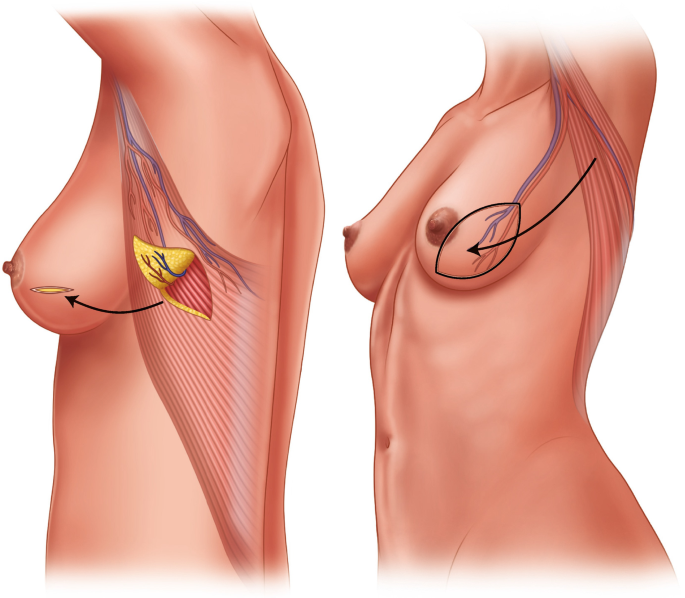
Partial breast reconstruction with local flaps is a technique to reconstruct your breast after cancer surgery without leaving a deformity. This procedure fills that defect that is left behind after removal of the cancer with your own fatty tissue taken from your side -so you keep your natural breast shape. With this technique we can often avoid the need for mastectomy.
breastcancer chest wall perforator flap fibroadenoma licap lymphnode surgery oncoplastic surgery patient education phyllodes tumor sentinel node surgery targeted axillary dissection
Who Is It For?
This works best if you:
- Have small to medium breasts
- Have cancer in the outer part of your breast (near your armpit)
What Happens During Surgery?
The surgery takes about 2 to 3 hours. Fatty tissue from your chest wall (your side or from below your breast) is dissected and ‘flipped’ into the space where the tumor in the breast was removed. The tissue stays connected to its blood supply so it stays healthy.
Benefits
- Your breast keeps its natural look and feel
- No scar on your actual breast—the scar is hidden under your brastrap
- The flap is only from fatty tissue. Your chest muscles stay intact—no shoulder or arm weakness
- No implants needed
- Oncologically safe—lower chance of needing more surgery later
"The LICAP flap is one of the most elegant volume-replacement techniques in our toolkit — it spares the muscle, hides the scar in the bra line, and consistently delivers a natural shape."
Recovery
- week 1-2: Initial wound recovery can take up to 2 weeks.
- week 3-6: Back to normal daily activities
- Avoid heavy lifting, swimming or strenuous excersize for about a month
- You’ll likely need radiotherapy after surgery—this is normal and usually heals fine
Your breast will settle into its final shape over 3 to 6 months.
The Bottom Line
Local flap reconstruction lets you keep your breast after cancer surgery while looking natural. It uses your own tissue, and leaves no visible scars on your breast, and has a quick recovery. If your cancer is in the outer part of your breast and you have smaller breasts, this might be a great option for you.
Leave a Reply